REITs in US 2025: 6% Dividend Yield Potential Examined
AD
The current state of REITs in the US for 2025 suggests a potential for a 6% dividend yield, driven by evolving market conditions, sector-specific performance, and strategic investment approaches.
AD
Are you looking to enhance your investment portfolio with stable income streams and growth potential? Dive into The Current State of REITs in the US for 2025: Potential for a 6% Dividend Yield. This exploration will unpack the factors influencing real estate investment trusts and assess the likelihood of achieving attractive returns in the coming year.
AD
Understanding REITs and Their Appeal
Real Estate Investment Trusts, or REITs, have long been a cornerstone for investors seeking exposure to real estate without the complexities of direct property ownership. These companies own, operate, or finance income-generating real estate across a range of property sectors. By law, REITs must distribute at least 90% of their taxable income to shareholders annually in the form of dividends, making them particularly attractive to income-focused investors.
The appeal of REITs extends beyond their dividend payout. They offer diversification to a traditional equity portfolio, potential for long-term capital appreciation, and often act as a hedge against inflation. For 2025, the landscape for REITs is shaped by several macroeconomic factors, including interest rate expectations, economic growth forecasts, and shifts in consumer and business behavior.
The Dividend Mandate and Investor Focus
The core of a REIT’s investment proposition lies in its dividend mandate. This regulatory requirement ensures a consistent income stream for shareholders, distinguishing REITs from many other equity investments. Investors are often drawn to REITs for their potential to provide a relatively stable and predictable income, which can be particularly valuable in volatile market conditions.
- Income Generation: High dividend payout ratios are a defining characteristic.
- Portfolio Diversification: Offers a way to invest in real estate without direct ownership.
- Liquidity: Traded on major stock exchanges, providing ease of buying and selling.
- Inflation Hedge: Real estate tends to perform well during inflationary periods.
In conclusion, understanding the fundamental structure and benefits of REITs is crucial for evaluating their potential in 2025. Their inherent design for income distribution, coupled with their role in portfolio diversification, positions them as a compelling option for a broad spectrum of investors.
Macroeconomic Factors Shaping 2025 REIT Performance
The performance of US REITs in 2025 will be heavily influenced by the broader macroeconomic environment. Key factors such as interest rates, inflation, and overall economic growth will play significant roles in determining their profitability and, consequently, their ability to deliver attractive dividend yields. Investors should closely monitor these indicators to anticipate market shifts.
Interest rate movements are particularly critical for REITs. As highly leveraged entities, rising interest rates can increase borrowing costs, potentially compressing net operating income and impacting dividend sustainability. Conversely, a stable or declining interest rate environment could provide a tailwind, reducing financing expenses and boosting profitability.
Interest Rate Trajectories and Their Impact
The Federal Reserve’s monetary policy will be a central theme for REITs in 2025. Expectations around rate hikes or cuts will directly affect the cost of capital for real estate companies. A higher interest rate environment can also make other income-generating assets, like bonds, more attractive, potentially diverting investment away from REITs.
- Rising Rates: Increased borrowing costs, potential for lower property valuations.
- Stable/Declining Rates: Reduced financing expenses, potential for higher property values.
- Bond Yields: Competitive alternative for income-seeking investors if rates rise significantly.
Beyond interest rates, inflation and economic growth forecasts are equally important. While real estate can act as an inflation hedge, persistent high inflation coupled with stagnant economic growth could temper consumer spending and business expansion, affecting demand for various property types. A robust economy, on the other hand, typically fuels demand for commercial and residential spaces, translating into higher rents and occupancy rates for REITs.
In summary, the interplay of interest rates, inflation, and economic growth will be pivotal in shaping the operating environment for US REITs in 2025. Investors need to assess these macroeconomic headwinds and tailwinds to make informed decisions about their REIT allocations.
Sector-Specific Outlook: Which REITs Will Thrive?
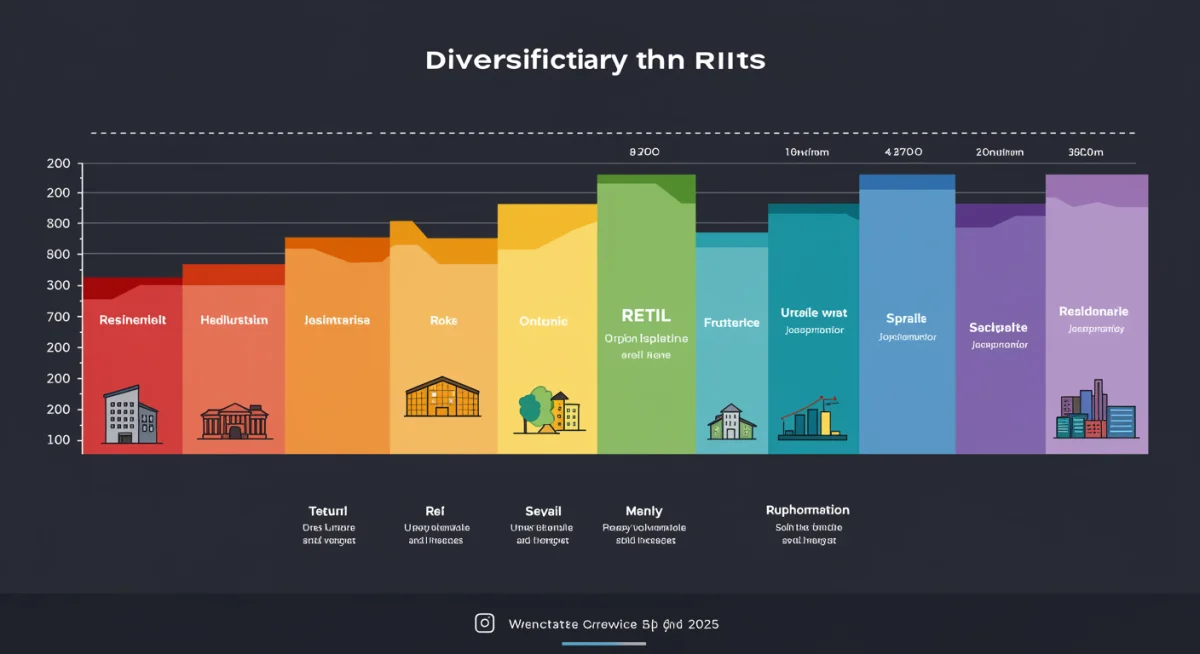
Not all REITs are created equal, and their performance in 2025 will likely vary significantly across different property sectors. Understanding the specific dynamics within residential, industrial, retail, office, and specialized REITs is crucial for identifying potential outperformers and those that might face challenges. Each sector responds uniquely to economic shifts and societal trends.
For instance, the industrial sector, driven by e-commerce growth and supply chain optimization, has shown remarkable resilience and is expected to continue its strong performance. Data center REITs, benefiting from the increasing demand for digital infrastructure, also present a compelling growth narrative. Conversely, the office sector continues to grapple with the long-term implications of hybrid work models, potentially facing headwinds in terms of occupancy and rental growth.
Residential and Industrial REITs: Continued Strength
Residential REITs, encompassing apartments and single-family rentals, are expected to benefit from demographic shifts and housing affordability challenges, driving demand for rental properties. Industrial REITs, supporting the logistics and distribution networks for e-commerce, are anticipated to maintain high occupancy rates and rent growth.
- Residential: Strong demand due to urban migration and housing costs.
- Industrial: Boosted by e-commerce expansion and efficient supply chains.
- Healthcare: Aging population driving demand for medical facilities.
Retail REITs, while having faced significant challenges in recent years, could see a resurgence in certain segments, particularly those focused on experiential retail or necessity-based services. However, the broader retail landscape remains competitive. Office REITs are likely to continue experiencing pressure, with vacancy rates potentially remaining elevated as companies optimize their office footprints. Specialized REITs, such as those focusing on cell towers or timberland, often have unique drivers that can offer uncorrelated returns.
In conclusion, a nuanced understanding of sector-specific fundamentals is paramount. Investors should look beyond aggregate REIT performance and delve into the individual drivers and challenges facing each property type to strategically position their portfolios for 2025.
Assessing the 6% Dividend Yield Potential
The prospect of a 6% dividend yield from US REITs in 2025 is an attractive target for many investors, but it requires careful assessment. This yield is not a guarantee and depends on a confluence of factors including prevailing interest rates, company-specific performance, and the broader economic climate. Achieving such a yield necessitates strategic selection and a realistic understanding of market conditions.
Historically, REITs have offered competitive dividend yields, often surpassing those of other asset classes. However, the sustainability of a 6% yield in 2025 will be influenced by how individual REITs manage their debt, maintain high occupancy rates, and achieve rental growth. A healthy balance sheet and robust operational performance are critical for consistent dividend payouts.
Factors Influencing Dividend Sustainability
Several internal and external factors contribute to a REIT’s ability to sustain and potentially grow its dividend. Strong management, prudent capital allocation, and effective property management are internal drivers. Externally, economic stability and favorable market conditions play a significant role.
- Funds From Operations (FFO): A key metric for assessing a REIT’s operating performance and ability to pay dividends.
- Payout Ratio: A lower payout ratio indicates greater room for dividend stability and growth.
- Debt Levels: High debt can strain cash flow and impact dividend sustainability.
- Property Portfolio Quality: High-quality, well-located assets tend to generate more consistent income.
Furthermore, the competitive landscape for income investments will also factor into the attractiveness of a 6% REIT yield. If alternative investments, such as corporate bonds or high-yield savings accounts, offer comparable returns with lower risk, some investors might shift their capital. Therefore, the 6% target must be viewed within the context of the broader investment universe.
Ultimately, while a 6% dividend yield is certainly achievable for select US REITs in 2025, it demands thorough due diligence and a focus on companies with strong fundamentals, diversified portfolios, and a proven track record of dividend stability and growth. It’s not a blanket expectation across the entire sector.
Strategic Investment Approaches for 2025
Navigating the REIT landscape in 2025 to achieve a potential 6% dividend yield requires a strategic and disciplined investment approach. This involves careful research, diversification, and a clear understanding of personal financial goals. Investors should consider both broad market trends and individual REIT characteristics to build a resilient portfolio.
One primary strategy is to focus on REITs with strong balance sheets, consistent FFO growth, and a history of stable or increasing dividends. These characteristics often indicate a well-managed company capable of weathering economic fluctuations. Diversification across different REIT sectors can also mitigate risk, as various property types perform differently under varying market conditions.
Diversification and Due Diligence
Diversifying across sectors is paramount. Placing all investments in a single REIT type, such as office or retail, could expose an investor to undue risk if that specific sector faces headwinds. Instead, a mix of residential, industrial, healthcare, and specialized REITs can provide a more balanced risk-return profile.
- Sector Diversification: Spread investments across different property types.
- Geographic Diversification: Invest in REITs with properties in various regions.
- Management Quality: Assess the experience and track record of the REIT’s management team.
- Valuation: Avoid overpaying for REITs, even those with strong fundamentals.
Moreover, investors should perform thorough due diligence on each potential REIT investment. This includes analyzing financial statements, reviewing management’s strategic plans, and understanding the company’s competitive advantages. Considering the potential impact of environmental, social, and governance (ESG) factors on long-term performance is also becoming increasingly important.
In conclusion, a strategic approach for 2025 involves a combination of fundamental analysis, thoughtful diversification, and a continuous monitoring of market conditions. By adopting these practices, investors can increase their likelihood of achieving their desired dividend yield targets while managing risk effectively.
Risks and Challenges for REITs in 2025
While the potential for a 6% dividend yield from US REITs in 2025 is appealing, investors must also be cognizant of the inherent risks and challenges that could impact performance. No investment is without its downsides, and understanding these potential pitfalls is crucial for informed decision-making and risk mitigation.
One significant challenge is the ongoing uncertainty surrounding interest rates. If inflation proves more persistent than anticipated, leading to further rate hikes by the Federal Reserve, REITs could face increased borrowing costs and potentially lower property valuations. This could put pressure on FFO and, consequently, dividend payouts.
Key Risks to Monitor
Beyond interest rates, other factors such as economic downturns, oversupply in certain property markets, and evolving tenant demands pose considerable risks. A recession could lead to higher vacancy rates and reduced rental income, impacting REIT profitability.
- Interest Rate Volatility: Higher rates increase borrowing costs and reduce property values.
- Economic Slowdown: Reduced demand for commercial and residential space.
- Oversupply: New construction can lead to increased competition and lower rents.
- Tenant Risk: Bankruptcy or consolidation of major tenants can impact occupancy.
Technological advancements and shifts in consumer behavior also present long-term challenges. For example, the rise of remote work continues to reshape the demand for office space, while the retail sector constantly adapts to e-commerce trends. REITs that fail to adapt their portfolios to these evolving demands may struggle to maintain competitiveness and profitability.
In summary, while the dividend potential of REITs is attractive, investors must carefully weigh these opportunities against the various risks and challenges. A comprehensive understanding of both the upside and downside scenarios is essential for building a robust and resilient investment strategy for 2025.
| Key Point | Brief Description |
|---|---|
| 6% Dividend Potential | Achievable for select US REITs in 2025, requiring careful due diligence and strong fundamentals. |
| Macroeconomic Impact | Interest rates, inflation, and economic growth significantly influence REIT performance. |
| Sector-Specific Dynamics | Industrial and residential REITs show strong outlooks; office sector faces ongoing challenges. |
| Strategic Investing | Diversification and fundamental analysis are key to mitigating risks and maximizing returns. |
Frequently Asked Questions About US REITs in 2025
A 6% dividend yield in REITs can result from strong Funds From Operations (FFO), efficient property management, high occupancy rates, and prudent capital allocation. Favorable interest rate environments and robust economic growth also play a significant role in supporting higher payouts.
Rising interest rates can negatively impact REITs by increasing borrowing costs for property acquisitions and development, which can compress profit margins. Conversely, stable or declining rates tend to benefit REITs by reducing financing expenses and making their dividend yields more attractive compared to fixed-income alternatives.
In 2025, industrial REITs are expected to continue strong performance due to e-commerce growth. Residential REITs may also thrive from housing demand. Healthcare and data center REITs are also positioned for growth, driven by an aging population and increasing digital reliance, respectively.
Key risks for REITs in 2025 include interest rate volatility, potential economic downturns leading to reduced demand, oversupply in certain property markets, and tenant bankruptcies. Changes in work patterns and consumer behavior, such as remote work, also pose challenges for specific sectors like office REITs.
Yes, diversification is crucial for REIT investments. Spreading investments across various REIT sectors (e.g., residential, industrial, healthcare) and geographical regions can help mitigate risks associated with specific market downturns or sector-specific challenges, enhancing portfolio resilience and long-term stability.
Conclusion
The outlook for US REITs in 2025 presents a compelling case for investors seeking income and growth, with a tangible potential for a 6% dividend yield. However, realizing this potential demands a thorough understanding of macroeconomic forces, diligent sector-specific analysis, and a commitment to strategic investment principles. By carefully navigating interest rate dynamics, identifying resilient property sectors, and mitigating inherent risks through diversification, investors can position their portfolios to capture the attractive returns that well-managed REITs are poised to offer in the coming year. The evolving real estate landscape will undoubtedly present both opportunities and challenges, making informed and adaptive strategies essential for success.
