2026 HSA Contribution Limits: Maximize Tax-Free Health Benefits

AD
Navigating 2026 Health Savings Account (HSA) contribution limits is crucial for maximizing tax-free benefits, offering a powerful tool for healthcare savings and long-term financial planning for eligible individuals.
AD
Navigating 2026 Health Savings Account (HSA) Contribution Limits: An Insider’s Guide to Maximizing Your Tax-Free Benefits is more critical than ever as healthcare costs continue to rise and tax strategies evolve. Understanding these limits and how to leverage them can significantly impact your financial well-being, ensuring you’re prepared for future medical expenses while enjoying substantial tax advantages.
AD
Understanding the Basics of Health Savings Accounts (HSAs)
Health Savings Accounts (HSAs) are tax-advantaged savings accounts that can be used for healthcare expenses. They are available to individuals enrolled in a High-Deductible Health Plan (HDHP) and offer a unique combination of tax benefits that make them a powerful tool for managing healthcare costs and saving for retirement. HSAs are not just for current medical expenses; they can also serve as a long-term investment vehicle.
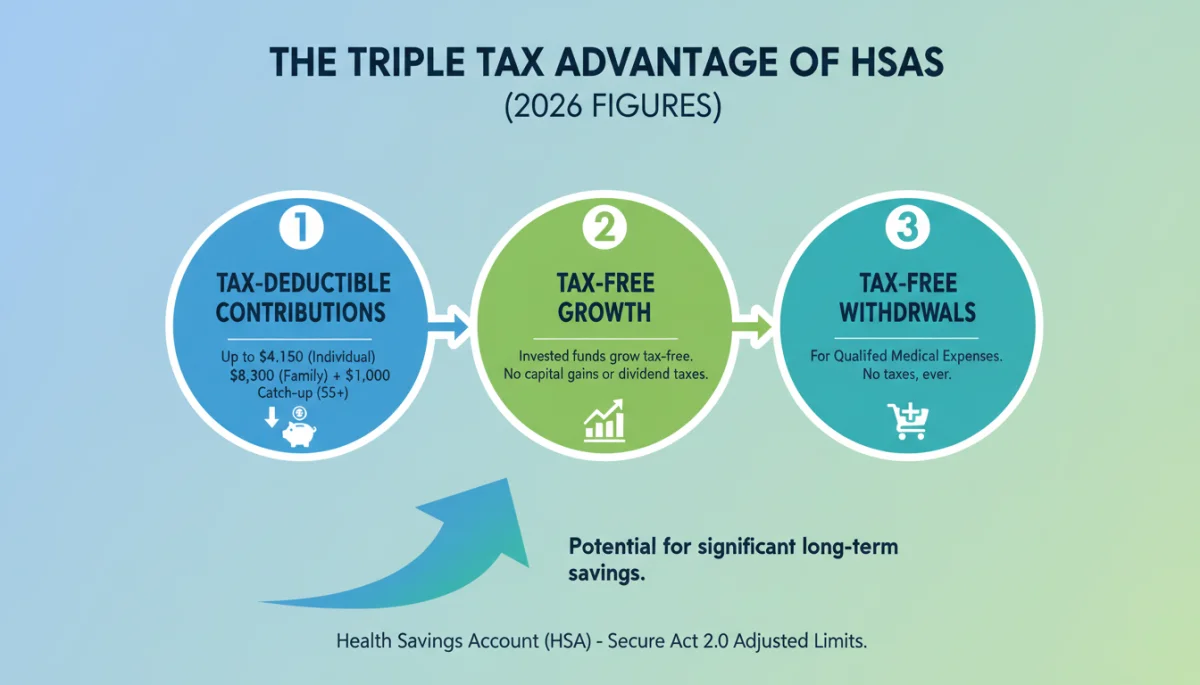
The core appeal of an HSA lies in its triple tax advantage. Contributions are tax-deductible, the money grows tax-free, and withdrawals for qualified medical expenses are also tax-free. This combination is unparalleled in the world of personal finance, making HSAs a favorite among savvy savers. Understanding these foundational elements is the first step toward effectively utilizing your HSA.
Eligibility Requirements for HSAs
To be eligible for an HSA, you must meet specific criteria set by the IRS. The primary requirement is enrollment in an HDHP. These plans typically have higher deductibles than traditional health insurance plans but often come with lower monthly premiums. The IRS defines minimum deductibles and maximum out-of-pocket expenses for HDHPs annually, which are subject to change and impact eligibility.
- HDHP Enrollment: You must be covered by an HDHP on the first day of the month for which you want to contribute.
- No Other Health Coverage: Generally, you cannot be covered by any other health plan that is not an HDHP.
- Not Enrolled in Medicare: Individuals enrolled in Medicare are not eligible to contribute to an HSA.
- Not Claimed as a Dependent: You cannot be claimed as a dependent on someone else’s tax return.
Meeting these eligibility requirements is paramount. Failing to do so can result in penalties and the loss of tax advantages. It’s always wise to confirm your eligibility with your health insurance provider or a tax professional to ensure compliance.
In essence, an HSA provides a robust financial mechanism for those with HDHPs to save for healthcare while enjoying significant tax breaks. Its flexibility and long-term growth potential make it an indispensable asset for many American families. Staying informed about eligibility and contribution rules is key to maximizing its benefits.
Decoding the 2026 HSA Contribution Limits
The Internal Revenue Service (IRS) adjusts HSA contribution limits annually to account for inflation and other economic factors. For 2026, these limits are crucial for individuals and families planning their healthcare savings strategies. These adjustments dictate the maximum amount you can contribute to your HSA, directly influencing your tax deductions and long-term savings potential. Staying abreast of these figures is essential for effective financial planning.
These limits are typically announced in the latter half of the preceding year, giving individuals and employers time to adjust their payroll deductions and financial strategies. Understanding both the individual and family contribution limits, as well as the catch-up contributions for those aged 55 and over, is vital for maximizing this powerful savings tool.
Individual vs. Family Contribution Limits
HSA contribution limits are bifurcated based on whether you have self-only HDHP coverage or family HDHP coverage. For 2026, while specific figures are yet to be officially released by the IRS, historical trends suggest a continued upward adjustment. For illustrative purposes, if the 2025 individual limit was, for example, $4,150, the 2026 limit would likely see a modest increase, perhaps to around $4,300 to $4,400. Similarly, if the 2025 family limit was $8,300, 2026 could see it rise to approximately $8,600 to $8,800.
- Self-Only Coverage: This limit applies if your HDHP covers only you.
- Family Coverage: This limit applies if your HDHP covers you and at least one other family member.
It’s important to remember that these are maximums, and any contributions from both you and your employer count towards these limits. Coordinating contributions, especially with employer contributions, is critical to avoid over-contributing and incurring penalties.
Catch-Up Contributions for Those 55 and Older
For individuals aged 55 and over, the IRS allows an additional catch-up contribution. This provision acknowledges that older individuals may have less time to save for retirement healthcare costs and provides an opportunity to boost their HSA balances. This catch-up contribution remains consistent regardless of whether you have individual or family coverage.
For example, if the catch-up contribution in 2025 was $1,000, it is highly probable to remain at $1,000 for 2026. This means an individual aged 55 or older with self-only coverage could contribute the standard individual limit plus the catch-up amount, significantly increasing their tax-advantaged savings. This extra contribution is a powerful incentive for older workers to fully fund their HSAs.
In summary, the 2026 HSA contribution limits, including catch-up provisions, offer substantial opportunities for tax-free savings. Staying informed about these figures and strategically planning your contributions will ensure you maximize the benefits available to you and your family.
Maximizing Your HSA: Strategies for 2026
Optimizing your Health Savings Account (HSA) in 2026 goes beyond simply contributing up to the annual limit. It involves strategic planning to leverage its unique triple tax advantages for both short-term healthcare needs and long-term financial growth. By adopting a proactive approach, you can transform your HSA from a mere savings account into a powerful investment vehicle that fuels your financial future.
Many individuals overlook the investment potential of their HSA, treating it solely as a checking account for immediate medical expenses. However, for those who can afford to pay for current medical costs out-of-pocket, investing HSA funds can lead to substantial wealth accumulation over time, especially when considering the tax-free growth.
Investing Your HSA Funds for Long-Term Growth
One of the most powerful strategies for maximizing your HSA is to invest the funds. Once your account balance reaches a certain threshold (often around $1,000), many HSA providers allow you to invest your money in various mutual funds, ETFs, or other investment options. This enables your savings to grow tax-free, much like a 401(k) or IRA.
- Pay Out-of-Pocket: If feasible, pay for current medical expenses with after-tax money and let your HSA funds grow untouched.
- Choose Diversified Investments: Select investment options that align with your risk tolerance and financial goals.
- Reinvest Earnings: Allow any investment gains to be reinvested back into your HSA to compound growth.
The longer you let your HSA funds grow, the more significant the impact of tax-free compounding. This strategy is particularly effective for younger individuals who have decades until retirement, allowing their HSA to become a substantial nest egg for future healthcare costs.
The Power of the Triple Tax Advantage
The triple tax advantage of HSAs is what sets them apart from almost any other savings vehicle. Understanding and fully utilizing each component is key to maximizing your benefits:
Contributions are tax-deductible, meaning they reduce your taxable income for the year you make them. This provides an immediate tax saving. The funds grow tax-free, meaning you don’t pay taxes on interest, dividends, or capital gains earned within the account. Finally, qualified withdrawals for medical expenses are also tax-free, both now and in retirement. This creates an incredibly efficient way to save for healthcare.
By consciously making tax-deductible contributions, allowing your funds to grow untouched through investments, and planning for tax-free withdrawals in retirement, you harness the full power of your HSA. This strategic approach ensures you are not only prepared for unexpected medical costs but also building a significant tax-free asset for your future.
Navigating Qualified Medical Expenses and Withdrawals
Understanding what constitutes a qualified medical expense is fundamental to leveraging your HSA without incurring penalties. The IRS provides specific guidelines on what expenses can be paid for with HSA funds on a tax-free basis. Misinterpreting these rules can lead to taxable withdrawals and potential penalties, undermining the very benefits an HSA is designed to offer.
Qualified medical expenses include a broad range of services and products, from doctor visits and prescription medications to dental care and vision services. It’s crucial to keep meticulous records of all medical expenses and HSA withdrawals to ensure compliance and facilitate tax reporting.
What Qualifies as a Medical Expense?
The IRS definition of qualified medical expenses is quite extensive, covering most common healthcare costs. This includes amounts paid for the diagnosis, cure, mitigation, treatment, or prevention of disease, and for treatments affecting any structure or function of the body. It also includes amounts paid for transportation primarily for and essential to medical care.
- Doctor Visits and Hospital Stays: Co-pays, deductibles, and co-insurance for medical appointments, surgeries, and hospitalizations.
- Prescription Medications: All FDA-approved prescription drugs.
- Dental and Vision Care: Exams, cleanings, braces, contacts, glasses, and eye surgery.
- Over-the-Counter Items: Certain over-the-counter medications and supplies, generally if prescribed or for specific conditions.
- Long-Term Care Premiums: Within certain limits based on age.
It’s important to note that cosmetic procedures, general health items like vitamins (unless prescribed for a specific medical condition), and premiums for health insurance (with some exceptions) are generally not considered qualified medical expenses. Always consult IRS Publication 502 for the most current and comprehensive list.
HSA Withdrawals: Tax-Free Now and in Retirement
One of the most attractive features of an HSA is the ability to withdraw funds tax-free for qualified medical expenses at any age. This means you can use your HSA to pay for current medical bills without paying taxes on the money you withdraw, provided the expense is qualified.
However, the true power of an HSA often shines in retirement. After age 65, you can withdraw funds from your HSA for any reason without penalty. If the withdrawals are for qualified medical expenses, they remain tax-free. If they are for non-medical expenses, they are taxed as ordinary income, similar to a traditional IRA or 401(k) withdrawal. This flexibility makes the HSA a versatile retirement savings tool, especially for healthcare costs in later life.
By carefully managing your HSA, understanding qualified expenses, and planning your withdrawals, you ensure that you maximize its tax-free benefits throughout your life, both for immediate healthcare needs and long-term financial security.
HSA vs. Other Retirement and Health Accounts
When planning for your financial future, it’s essential to understand how Health Savings Accounts (HSAs) compare to other common retirement and health-related accounts, such as 401(k)s, IRAs, and Flexible Spending Accounts (FSAs). While each offers unique benefits, HSAs often stand out due to their unparalleled tax advantages and flexibility, especially when used strategically.
The choice of which account to prioritize or how to integrate them into your overall financial plan depends heavily on your individual circumstances, current health needs, and long-term goals. A comprehensive understanding of their differences can help you make informed decisions.
HSA vs. 401(k) and IRA
HSAs share some similarities with 401(k)s and IRAs, particularly regarding their tax-advantaged growth, but their primary purpose and withdrawal rules differ significantly. Both 401(k)s and IRAs are designed primarily for retirement savings, with tax benefits focused on either contributions (traditional) or withdrawals (Roth).
- Tax Advantages: HSAs offer a triple tax advantage (deductible contributions, tax-free growth, tax-free withdrawals for medical expenses), which is generally superior to the double tax advantage of 401(k)s and IRAs.
- Withdrawal Flexibility: Before age 65, non-medical withdrawals from an HSA are subject to a 20% penalty plus ordinary income tax. After 65, non-medical withdrawals are taxed as ordinary income but without penalty, similar to a traditional IRA. 401(k)s and IRAs typically incur penalties for withdrawals before age 59½.
- Purpose: HSAs are designed for healthcare expenses, while 401(k)s and IRAs are for general retirement savings. However, HSAs can effectively become a supplemental retirement account after age 65.
For those eligible, maximizing HSA contributions often makes sense before fully funding other retirement accounts, given its superior tax treatment for healthcare expenses, which are a significant cost in retirement.
HSA vs. Flexible Spending Accounts (FSAs)
Flexible Spending Accounts (FSAs) are another common employer-sponsored benefit for healthcare expenses, but they operate quite differently from HSAs. While both allow you to pay for qualified medical expenses with pre-tax dollars, FSAs are generally ‘use-it-or-lose-it’ accounts.
FSAs typically require you to spend the funds within the plan year or a short grace period, whereas HSA funds roll over year after year and can be invested. This fundamental difference makes HSAs a much more powerful long-term savings and investment vehicle. FSAs are better suited for predictable, short-term medical expenses.
In conclusion, while 401(k)s, IRAs, and FSAs each play a vital role in financial planning, the HSA stands out for its unique combination of tax benefits, investment potential, and flexibility, especially for long-term healthcare savings and as a supplementary retirement fund. Understanding these distinctions is crucial for building a robust financial strategy.
Strategic Planning for 2026 HSA Contributions
Effective planning for your 2026 HSA contributions involves more than just knowing the limits; it requires a thoughtful approach to budgeting, maximizing employer contributions, and understanding the tax implications. A well-executed HSA strategy can significantly reduce your tax burden, provide a safety net for medical emergencies, and build a substantial nest egg for future healthcare costs.
The goal is to contribute as much as you can comfortably afford, ideally up to the maximum limit, to fully capitalize on the triple tax advantage. This proactive stance ensures you are not leaving any money on the table when it comes to tax-efficient savings.
Budgeting and Contribution Strategies
To maximize your HSA contributions, start by integrating them into your annual budget. Treat your HSA contributions as a priority, similar to your 401(k) or IRA contributions. Consider setting up automatic contributions from your paycheck or bank account to ensure consistency.
- Payroll Deductions: Contribute through payroll deductions to benefit from FICA tax savings (Social Security and Medicare taxes), in addition to income tax savings.
- Lump-Sum Contributions: If you receive a bonus or tax refund, consider making a lump-sum contribution to reach your annual limit.
- Prioritize Contributions: For many, fully funding an HSA before other retirement accounts can be a smart move due to its unique tax benefits.
Remember that you have until the tax filing deadline (typically April 15th of the following year) to make contributions for the previous tax year. This flexibility can be useful for year-end tax planning.
Leveraging Employer Contributions and Wellness Programs
Many employers contribute to their employees’ HSAs as part of their benefits package. These employer contributions count towards your annual limit, so it’s essential to factor them into your planning. Additionally, some employers offer incentives through wellness programs that can result in additional HSA contributions.
Actively participate in any wellness programs offered by your employer that provide HSA contributions. These can be an easy way to boost your savings without directly impacting your take-home pay. Always verify the amount your employer contributes and adjust your personal contributions accordingly to avoid exceeding the annual limit.
By strategically budgeting, making regular contributions, and fully utilizing employer contributions and wellness incentives, you can ensure your 2026 HSA is fully funded and working optimally for your financial and healthcare needs. This comprehensive approach is key to long-term financial health.
Common Pitfalls and How to Avoid Them
While Health Savings Accounts (HSAs) offer tremendous benefits, there are several common pitfalls that individuals can fall into if they’re not careful. Avoiding these mistakes is just as important as understanding the benefits, as errors can lead to penalties, lost tax advantages, and missed opportunities. Being informed and proactive can help you navigate these complexities smoothly.
From incorrect eligibility to improper withdrawals, a thorough understanding of HSA rules is crucial. Many issues arise from a lack of awareness or misinterpretation of IRS guidelines, emphasizing the need for continuous education on this powerful financial tool.
Ineligibility and Over-Contributing
One of the most significant pitfalls is contributing to an HSA when you are not eligible. As discussed, eligibility hinges on having an HDHP and not being covered by certain other health plans or Medicare. Contributing when ineligible can lead to tax penalties and the need to withdraw excess contributions, which can be a complicated process.
- Verify HDHP Status: Always confirm your health plan meets the IRS definition of an HDHP.
- Check Other Coverage: Ensure you don’t have disqualifying coverage, such as a spouse’s non-HDHP plan that covers you.
- Monitor Medicare Enrollment: Stop contributions once you enroll in Medicare, even if you still have an HDHP.
Similarly, over-contributing to your HSA (exceeding the annual limit) can also result in a 6% excise tax on the excess amount for each year it remains in the account. Carefully track all contributions, including those from your employer, to stay within the limits.
Improper Withdrawals and Record Keeping
Another common mistake is making non-qualified withdrawals before age 65. If you withdraw funds from your HSA for expenses that are not considered qualified medical expenses before turning 65, the withdrawal will be subject to ordinary income tax plus a 20% penalty. This can significantly erode the value of your savings.
Poor record-keeping is often linked to improper withdrawals. Without proper documentation of your qualified medical expenses, you may struggle to prove to the IRS that your withdrawals were legitimate if audited. This could result in your tax-free withdrawals being reclassified as taxable income and subject to penalties.
Always keep detailed records of all medical receipts and HSA statements. Many HSA providers offer online tools to help track expenses and withdrawals. By understanding eligibility, carefully monitoring contributions, and maintaining meticulous records of qualified medical expenses, you can effectively avoid these common pitfalls and fully realize the tax-free benefits of your HSA.
| Key Aspect | Description |
|---|---|
| 2026 Contribution Limits | Annual maximums for self-only and family coverage, usually adjusted for inflation. Essential for maximizing tax-free savings. |
| Eligibility Requirements | Must be enrolled in a High-Deductible Health Plan (HDHP) and not have other disqualifying health coverage. |
| Triple Tax Advantage | Contributions are tax-deductible, funds grow tax-free, and qualified withdrawals are tax-free. A powerful financial tool. |
| Investment Potential | Ability to invest HSA funds for long-term, tax-free growth, turning it into a significant retirement savings vehicle. |
Frequently Asked Questions About 2026 HSA Limits
While the official 2026 HSA contribution limits have not yet been released by the IRS, they are typically announced in the latter half of the preceding year. Based on historical trends and inflation adjustments, individual limits are expected to see a modest increase from the 2025 figures, allowing for greater tax-advantaged savings for self-only HDHP coverage.
Family HSA contribution limits for 2026 will also be higher than individual limits, reflecting the increased healthcare costs associated with covering multiple family members under an HDHP. These limits encompass contributions from both the account holder and their employer, necessitating careful tracking to avoid exceeding the maximum allowed amount for the year.
Yes, individuals aged 55 and over are eligible to make an additional catch-up contribution to their HSA in 2026, similar to previous years. This catch-up amount, which is typically $1,000, is designed to help older savers boost their healthcare savings as they approach retirement, and it applies regardless of individual or family coverage.
If you over-contribute to your HSA in 2026, the excess amount is subject to a 6% excise tax for each year it remains in the account. To avoid this penalty, you must remove the excess contributions and any earnings attributable to them before the tax filing deadline, including extensions. Careful tracking of all contributions is essential.
Yes, any contributions made by your employer to your HSA are included in and count towards your total annual contribution limit for 2026. It is crucial to factor in these employer contributions when planning your personal contributions to ensure you do not exceed the IRS-mandated maximums for individual or family coverage.
Conclusion
Navigating 2026 Health Savings Account (HSA) Contribution Limits: An Insider’s Guide to Maximizing Your Tax-Free Benefits underscores the importance of proactive financial planning. By understanding the updated limits, eligibility criteria, and strategic approaches to investing and managing your HSA, you can unlock significant tax advantages and secure your financial well-being for both immediate and future healthcare needs. The HSA remains a powerful, flexible tool for those enrolled in HDHPs, offering unparalleled opportunities for tax-free growth and withdrawals for qualified medical expenses. Embrace these strategies to make your HSA a cornerstone of your financial health.
